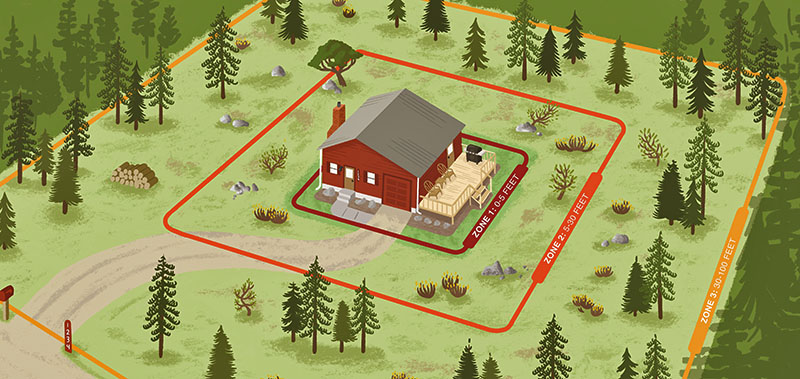
The Home Ignition Zone is the area around a structure where what's growing determines whether the structure survives. It's the framework the Colorado State Forest Service and every county in the state uses, and it's how we scope every job.
Three zones, measured outward from the furthest attached point of the house —which includes decks, not just walls.
The zones aren't fixed distances applied uniformly. Slope, aspect, stand density, and where the house sits all move the boundaries, sometimes considerably.
On the vegetation side this zone is close to absolute: no shrubs against the foundation, no juniper under the windows, no continuous plant material running to the siding, nothing woody that can carry flame to the wall.
We rebuild this zone rather than stripping it. Noncombustible substrate, appropriate hardscape, and planting kept back and kept green. It should read as deliberate landscaping, not as a scorched perimeter.
Zone 1 also involves the structure itself — roof, gutters, vents, deck undersides, and fencing where it meets the wall. That work is home hardening, and it's covered on our Home Hardening & Risk Assessments page. The two services meet here, and on most properties they should be done together.
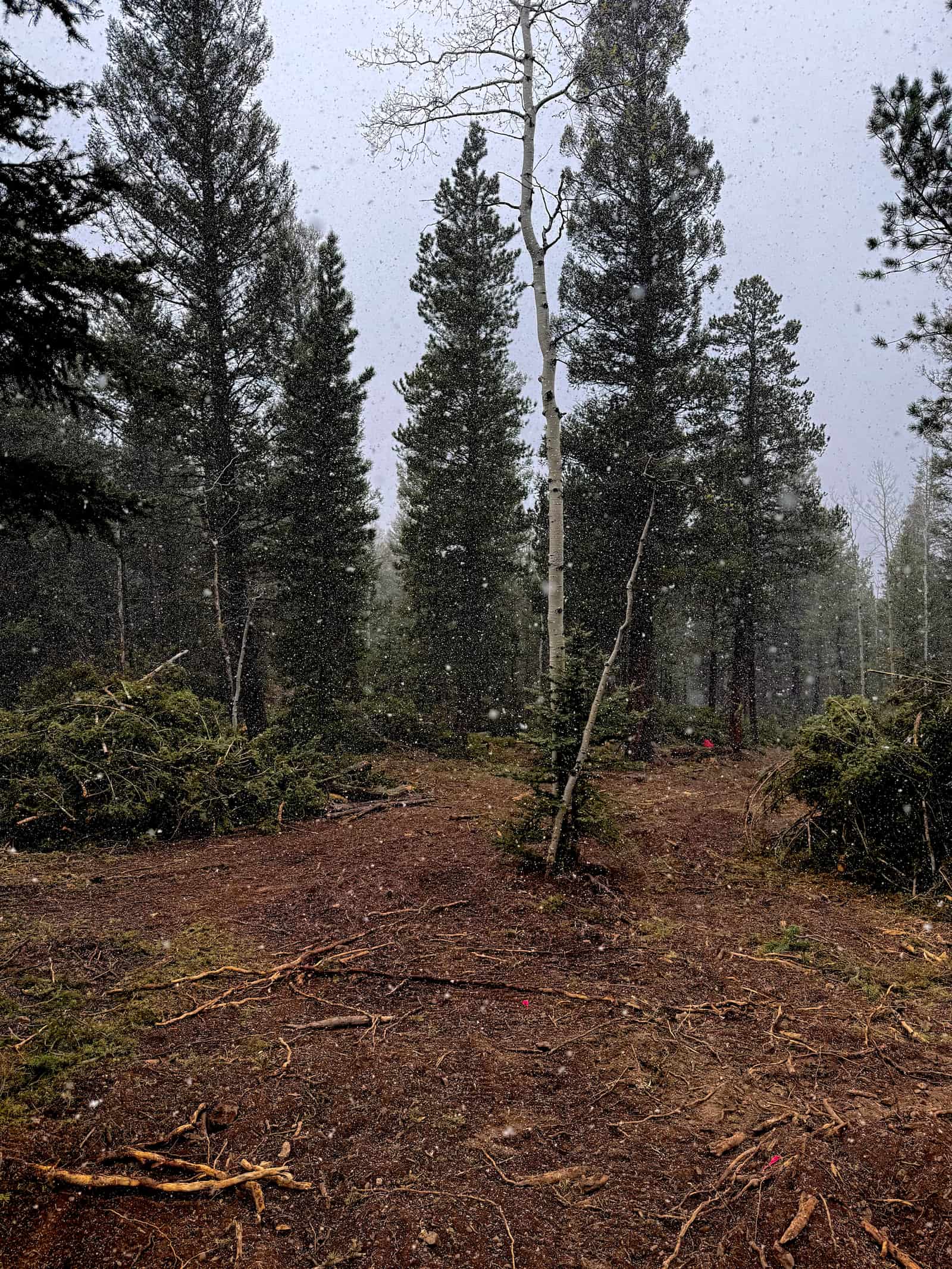
This is where most of the vegetation work happens on a typical foothills property.
Crown spacing between remaining trees so fire can't move continuously from tree to tree. Ladder fuel removal — the low limbs and understory that let a groundfire climb into the canopy. Dead and downed material cleared. Propane tanks, woodpiles, and stored lumber relocated out of the zone entirely.
In dense lodgepole this zone takes the most work and returns the most benefit.
Thinning, so a crown fire has to drop to the ground before it reaches your house.
That's the whole objective. A ground fire is something a crew can work with. A crown fire arriving at a structure is not, and crews will not commit to defending a house they can't safely stand near.
On sloped ground this zone extends well past 100 feet on the downhill side. Fire runs uphill, which means the ground below your house usually matters more than the ground above it — the opposite of what most people assume looking out a window.
Past roughly 100 to 200 feet, the work stops being about your structure and starts being about the property.
That's a different job with a different objective — fuel breaks, stand-level thinning, treating along roads and property lines, managing beetle-killed timber across acreage. If you have significant ground beyond the HIZ, that's Hazardous Fuels Reduction, and on larger parcels it's worth planning both together so the treated area is continuous rather than a treated island inside untreated timber.
There is no standard prescription, and anyone quoting a per-acre number before walking the property is guessing.
Slope. Fire accelerates uphill. A house at the top of a drainage sits at the top of a chimney, and the treated area below it needs to be substantially deeper than the standard numbers suggest.
Aspect. South and west-facing slopes dry earlier, cure faster, and carry fire more readily than north-facing ground. Two properties on the same road can need different treatment.
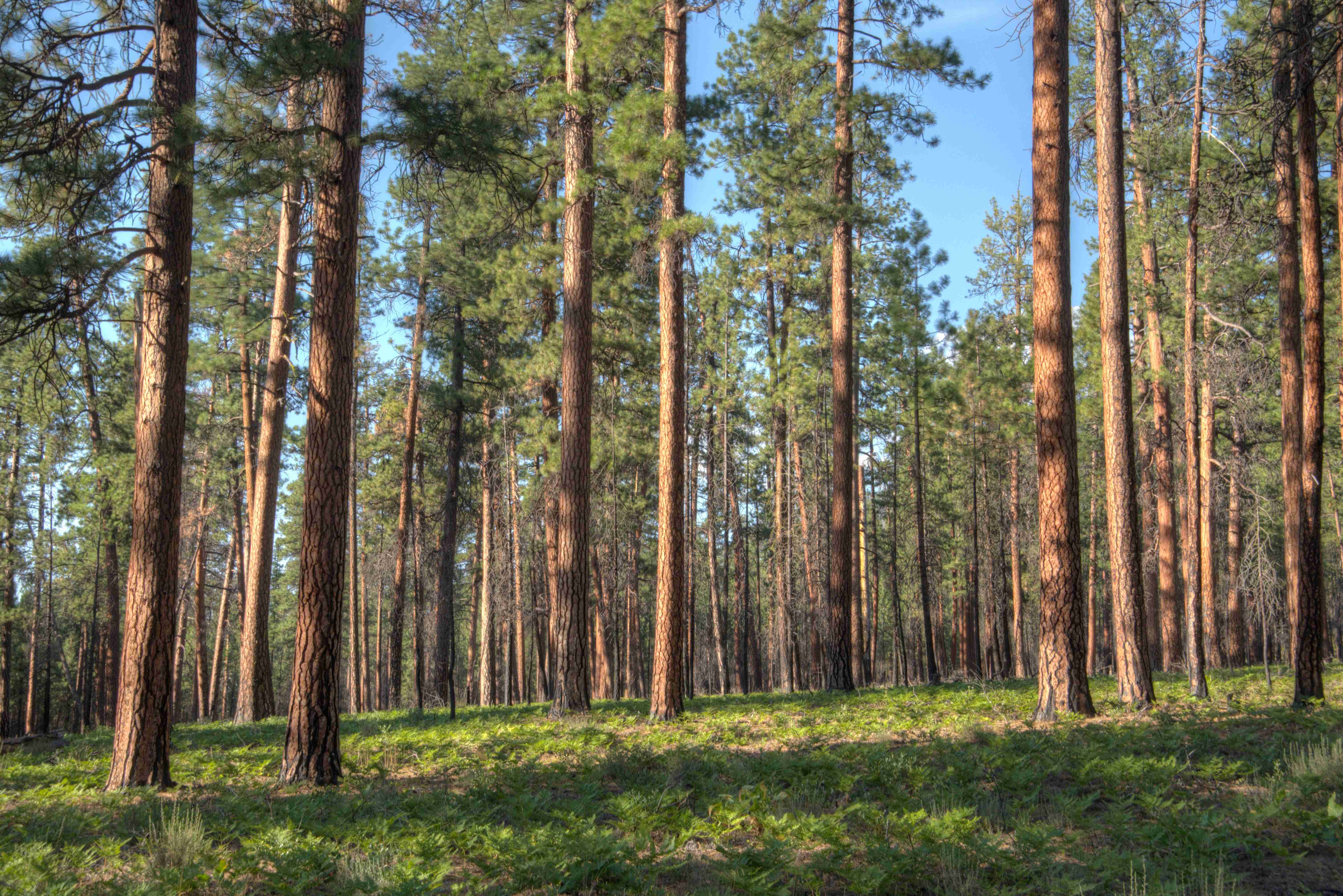
Stand type and density. Doghair lodgepole, mixed conifer with a grass understory, and open ponderosa all behave differently and need different work.
Structure siting and access. Where the house sits relative to prevailing wind, and whether an engine can reach it and turn around, both change what's worth doing first.
This is the objection we hear on nearly every property walk, and it's a fair one. People move to the foothills for the trees.
Defensible space is thinning, not clearing. We remove suppressed and dead stems, open crown spacing, and take out ladder fuels. The healthy mature trees you moved here for generally stay — and they do better afterward, with less competition for water and light.
An overstocked stand is not a healthy stand. Most properties look better when we leave than when we arrived, and that isn't a sales line. It's what happens when you take out the weak stems and give the good ones room.
Requirements moved substantially in 2026 and they differ by county.
Jefferson County's Wildfire Resiliency Code took effect for permits applied for on or after July 1, 2026, alongside an expanded Wildland-Urban Interface Overlay Map. Boulder County ties defensible space to building permits at low thresholds —a rebuilt deck can be enough. Park County runs its requirements through the fire protection district rather than the county.
We work to whichever standard applies to your property, and we'll tell you which one that is during the assessment.
The work is worth more when it's documented.
Every project comes with a mitigation packet — Home Ignition Zone maps, before-and-after photography, and itemized receipts. That's what you hand your agent, attach to a cost-share grant application, or produce if you're appealing a wildfire risk score.
Cost-share programs can offset a meaningful share of larger projects, and Colorado offers a state income tax credit for qualifying mitigation costs on private land. See Grant Funding Assistance.
Vegetation regrows. Needles fall every year. Defensible space created in 2023 is not defensible space today, and in some counties permits now carry a term with a maintenance obligation attached.
We offer annual pre-season maintenance visits on properties we've treated. If you'd rather handle upkeep yourself, we'll leave you knowing exactly what to watch and when.
How far out does defensible space need to go? The standard zones run 0–5 feet, 5–30 feet, and 30–100+ feet. On sloped ground the downhill zone extends considerably further, because fire runs uphill toward the structure.
Do I need a permit to create defensible space? Not for voluntary work on an existing home. Permits generally attach to construction — new builds and additions — and triggers differ by county.
Will I have to cut down all my trees? No. This is thinning, not clearing. Suppressed and dead stems come out, crown spacing opens up, and ladder fuels go.
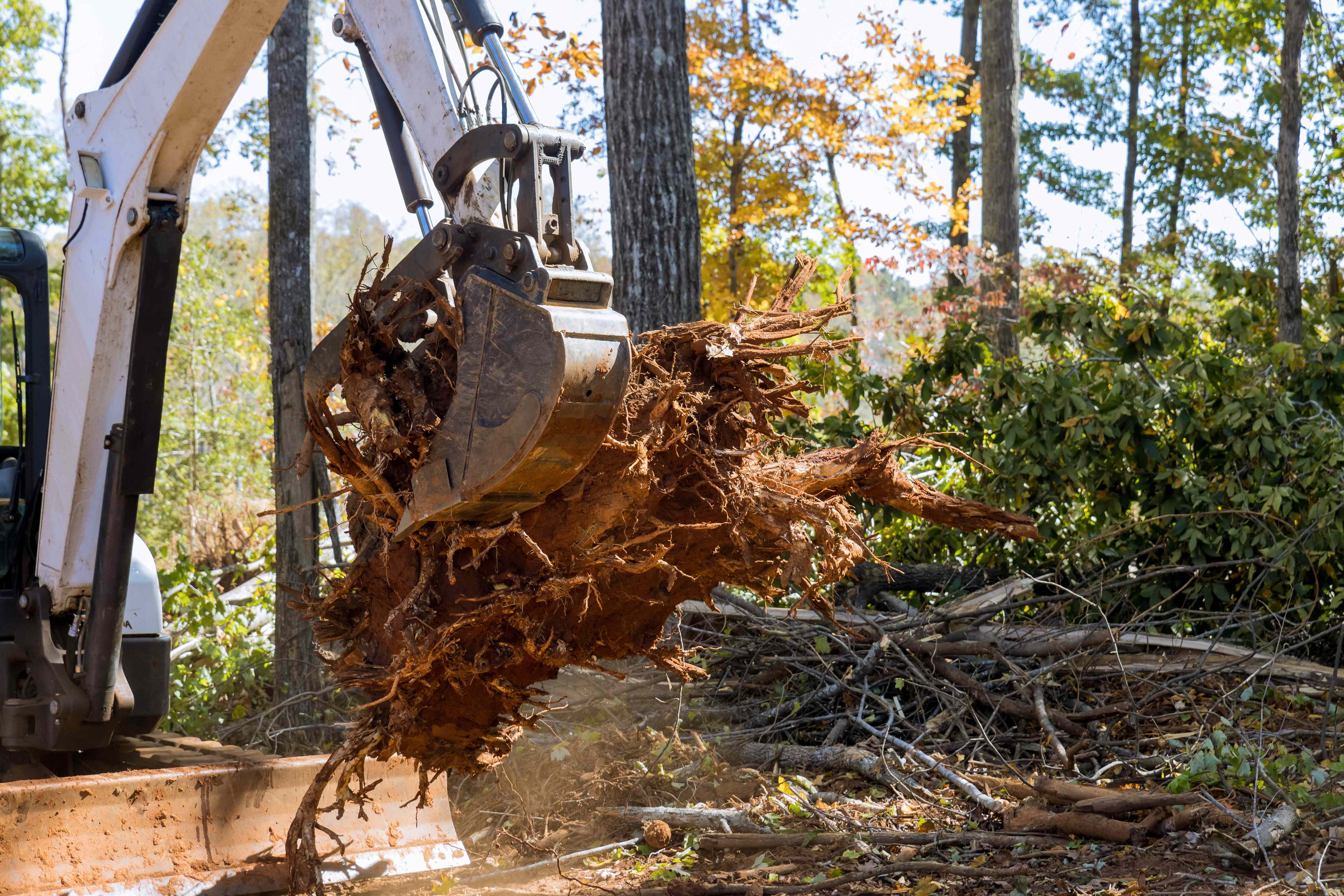
What happens to all the material you cut? Chipped on site or hauled off. In several areas we work, open burning isn't permitted, so disposal is the part that stalls do-it-yourself projects.
How often does defensible space need redoing? Plan on revisiting it every few years. Some counties now attach a maintenance obligation to the permit.
Defensible space creation across the Colorado foothills — Evergreen, Conifer, Bailey, Golden, Woodland Park, and Nederland — and throughout Jefferson, Park, Teller, Boulder, Larimer, Douglas, and El Paso counties.
The questions we get asked on nearly every property walk — cost, funding, and what it means for your insurance.
Wood production is a complex and vital industry that involves the cultivation, harvesting, processing, and utilization of wood for various purposes. It serves as a cornerstone in numerous sectors.
%20(1).png)
