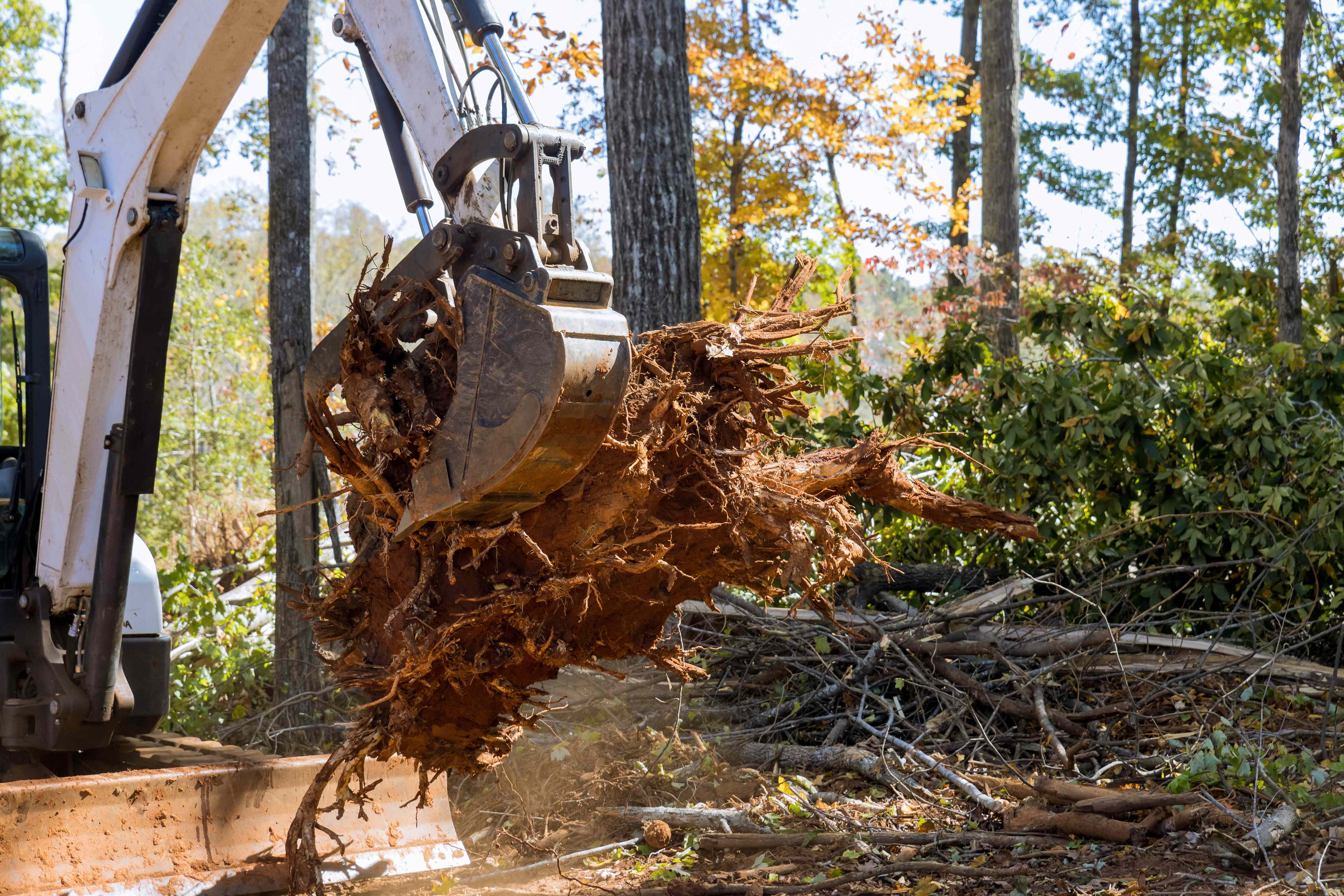
Before you pay anyone, including us, find out what your county and fire district already run. In several parts of our service area these programs are genuinely good and they cost little or nothing.
Jefferson County runs SLASH — Sustainable Lands and Safer Homes — with drop-off yards operating roughly June through October, rotating between locations across the county. Sites include Tincup Ridge near Golden and a rotational yard at Marshdale in Evergreen. Fees are based on load size. Check the current calendar at jeffco.us/slash before you load up, because yards can close at short notice for capacity or weather, and they run an alert list you can join.
Evergreen Fire Rescue runs a chipping program for residents inside the district. You stack your piles roadside, crews come to you, and it's first-come-first-serve with limited places that fill quickly. One request per household, and piles need to be stacked by 8 a.m. on your scheduled day.
Boulder County's Wildfire Partners runs a community chipping program where neighborhoods meeting the criteria stack slash roadside and a county-approved contractor chips and hauls it, with the program paying the contractor. The Nederland sort yard is free to use — including for non-residents.
Gilpin County has a slash yard opposite the transfer station, free to residents with a load-based fee for everyone else.
Other counties and fire districts run their own. Ask yours. We would genuinely rather you used a free program than paid us, and if that's the right answer for your property we'll tell you.
They're good programs. They also have real limits, and this is usually the point at which people call.
You need a truck or trailer. Slash yards are drop-off, not collection. No vehicle, no option.
Everything is unloaded by hand. Jefferson County notes that unloading takes around thirty minutes per load and asks you to arrive at least that long before closing. That's thirty minutes of hand-unloading, per trip.
The volume is worse than it looks. A single afternoon of cutting produces far more material than most people expect. A pile that looks like one truckload is usually three or four, and each one is a round trip plus the unloading.
The material has to be clean and sorted. Only clean woody material is accepted — no trash, no rocks, no yard waste — and pine needles have to be separated from limbs. Turn up with a mixed load and you'll be turned away.
The calendar doesn't always suit you. Yards run seasonally, on set days, and can close without notice for capacity or weather. Chipping programs fill up early and are limited to district residents.
Some properties simply can't do it. Steep ground, long driveways, or slash spread across acreage rather than piled by the road. If you can't get the material to a vehicle, the drop-off yard isn't an option regardless of what it costs.
And it might not be your job anyway. If a contractor cut it, treating the slash should have been part of the price. Ask before you assume.
Chip on site. For most properties this is the better answer. A chipper handles volume that would take a homeowner a dozen trips, and the chip can be spread away from structures where it holds soil and suppresses weeds. Nothing leaves the property, which on acreage is usually the cheaper option too.
Haul it off. Where chip isn't wanted, or where the material is unsuitable, we load and remove it.
Clear existing piles. You cut it, you're looking at it, and you'd like it gone. That's a job on its own and we do it as one — you don't have to hire us for anything else.
Handle infested material properly. See below, because this one has rules.
Finish what we start. On any mitigation work we do, slash treatment is part of the job rather than an extra. The property is finished when we leave.
If you've been cutting beetle-infested trees, the material needs handling that actually deals with the beetles rather than just relocating them.
Green infested wood still holds live beetles under the bark. Move it to another property, stack it beside the house, or leave it lying and the beetles emerge and find your other trees — or your neighbor's.
Jefferson County accepts mountain pine beetle infested logs at the Tincup Ridge yard only, and asks that infested material is brought outside beetle flight season — before mid-June or after the end of September. That timing exists for a reason.
Chipping deals with it. So does removal to an appropriate site. What doesn't is a neat stack of infested rounds by the woodshed.
If you're not sure whether what you cut was infested, we'll tell you.
Open burning is the option people assume they have, and in a lot of our service area they don't.
Inside Woodland Park city limits, open burning isn't permitted at all beyond small recreational fires. In the Platte Canyon district around Bailey you need a site inspection before a permit is issued, and the conditions are specific — pile size limits, nothing lit after 2 p.m., everything out by sunset. Fire bans close the option entirely for much of the year in many counties.
Rules vary by county, by fire district, and by the day. Check with your fire district or county sheriff before you burn anything, and never assume last year's answer still holds.
The practical reality for most homeowners is that burning isn't available when they need it, which is why chipping and hauling exist.
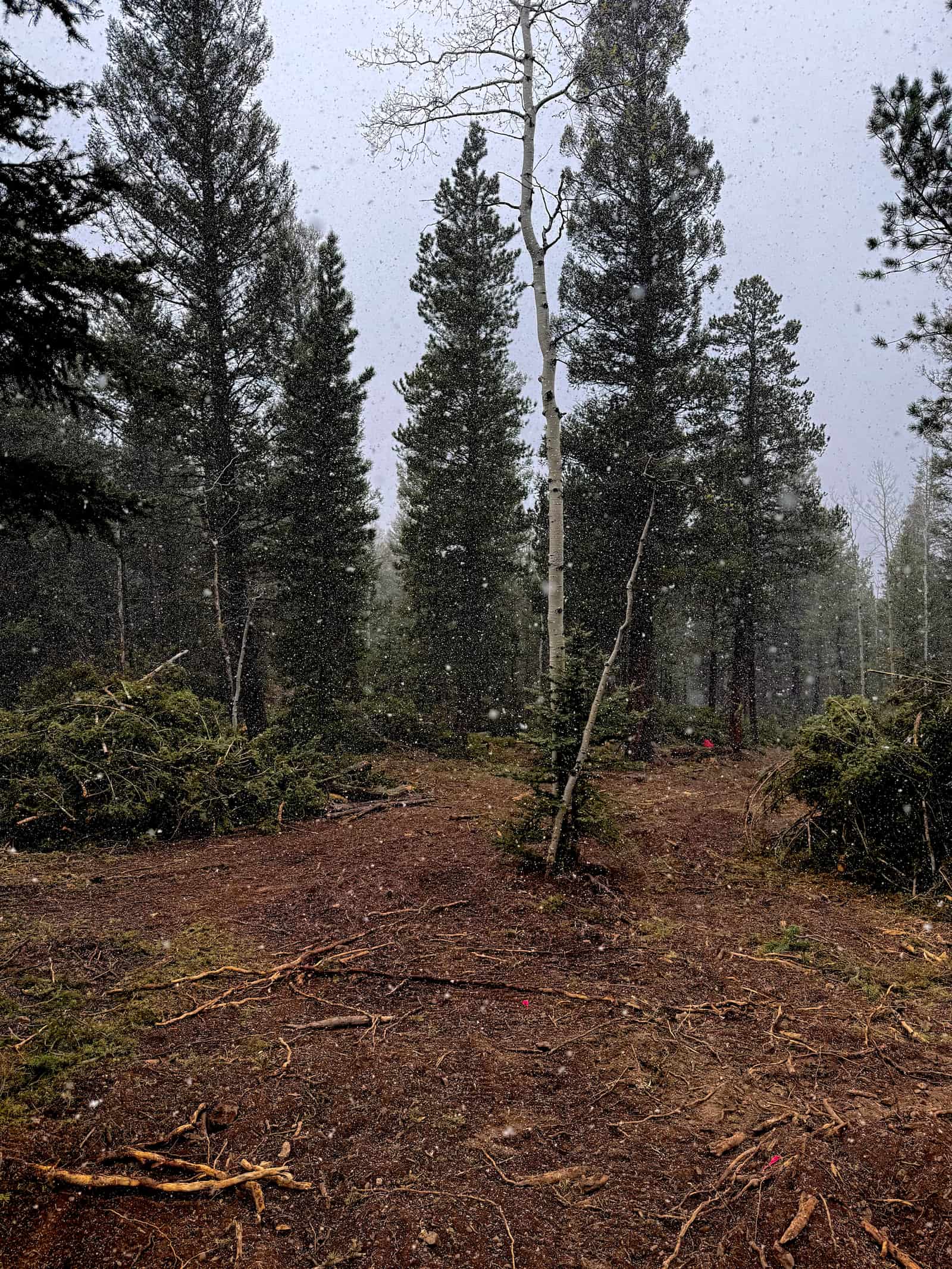
Slash left on the ground isn't neutral. It's worse than what you started with.
Standing timber burns from the crown down. Cut material lying on the ground is a continuous surface fuel bed at exactly the height a ground fire travels — and it's dry, fine, and well aerated, which is the definition of good kindling. A thinned property covered in slash has traded one problem for a more immediate one.
It also fails inspection. In counties that require slash treated, an inspector will not pass a property with cut material lying on it. In Platte Canyon's district that's explicit: all created slash must be chipped, burned or removed, and firewood stacked upslope of the structure.
And it doesn't go away on its own. Colorado's dry climate means limbs cut two years ago are still there, still dry, and still fuel.
Volume, access and what happens to the material.
Chipping on site is usually cheaper than hauling, because nothing leaves. Access decides whether a chipper can reach the material or whether it has to be dragged. Scattered slash across acreage costs more than a tidy pile by the driveway — so if you've already cut, piling it somewhere reachable before we arrive will save you money.
We'll give you a firm number after seeing it. On smaller jobs a photo or two is often enough to quote from.
I cut my own trees and now I have a huge pile. Can you just take it?
Yes. That's a job on its own and you don't need to hire us for anything else. Send a photo and we'll give you a number.
Should I use the county slash yard instead?
If you have a truck, the time, and a manageable amount of material, probably yes — it's cheaper. It stops making sense at volume, without a vehicle, or where the material can't be moved to one.
Can you chip on any property?
Most. The limits are access and slope — a chipper needs to reach the material or the material needs to reach the chipper. We'll tell you honestly if your ground doesn't suit it.
What happens to the chip?
Usually spread on your property, away from structures, where it holds soil and suppresses weeds. Or removed if you'd rather not have it.
Can I burn it instead?
Sometimes, depending on your county, your fire district and current restrictions. In several areas we work you can't at all. Check locally before you plan around it.
Is slash removal included when you do mitigation work?
Yes. Treating what we cut is part of the job, not an extra line.
Slash removal, chipping and pile clearing across the Colorado foothills — Evergreen, Conifer, Bailey, Golden, Woodland Park and Nederland — and throughout Jefferson, Park, Teller, Boulder, Larimer, Douglas and El Paso counties.
The questions we get asked on nearly every property walk — cost, funding, and what it means for your insurance.
Wood production is a complex and vital industry that involves the cultivation, harvesting, processing, and utilization of wood for various purposes. It serves as a cornerstone in numerous sectors.
%20(1).png)
