We work across the Colorado foothills, from the Front Range canyons to the Peak to Peak corridor and the Ute Pass. Requirements differ significantly between counties — Jefferson County's code changed in July 2026, Boulder County ties defensible space to building permits at unusually low thresholds, and Park County runs its requirements through the fire protection district rather than the county.
Select your area for local requirements, fire restrictions, and what mitigation actually looks like on the ground where you live:
Evergreen · Conifer · Bailey · Golden · Woodland Park · Nederland
Serving Jefferson, Boulder, Larimer, Douglas, El Paso, Teller, Park, Clear Creek, and Gilpin counties.
Questions about cost, permits, or insurance? See our FAQ.
If you own property in the Colorado foothills, 2026 changed the rules on you twice.
Building codes: Colorado's statewide Wildfire Resiliency Code rolled out across wildland-urban interface jurisdictions through 2026. Jefferson County's version took effect for permits applied for on or after July 1, 2026, with an expanded WUI boundary map. It isn't retroactive — living in your existing home triggers nothing — but it applies when you pull a permit for new construction or significant exterior work, and in some counties defensible space permits now carry a term with a maintenance obligation attached.
Insurance: HB25-1182 took effect July 1, 2026. Insurers using wildfire risk models must now disclose your risk score annually, account for parcel-level and community mitigation in their models or offer discounts for documented mitigation, and provide an appeal process.
The practical effect of both:
Mitigation work is worth more when it's documented, and undocumented work is worth considerably less. Every project we complete comes with a mitigation packet built for exactly this — HIZ maps, before-and-after photography, and itemized receipts.
There's no honest per-acre figure. Stand density, slope, equipment access, and slash disposal volume drive the number far more than lot size does — two properties of the same size on the same road can differ several times over.What we can tell you is that help exists and most homeowners never find it:
- Colorado offers a state income tax credit for qualifying wildfire mitigation costs on private land, claimed with documented receiptsCost-share grants are available through the Colorado State Forest Service and various county and fire district programs, often on a 50/50 basis.
- We offer payment plans and financing in house.
We walk the property, give you a firm written number at no charge, and tell you during that visit which funding applies to your situation — not after you've paid.
Colorado structures destroyed by wildfire, 2006–2025
of Coloradans live in the wildland-urban interface
average Colorado homeowners insurance increase, 2018–2023
more likely to survive a wildfire with defensible space
We've watched fire move through Colorado timber and seen which houses were still standing afterward. That's what shapes how we read your property — where fire will run, what carries it to the house, and what a crew can actually defend when they arrive.

We're wildland firefighters. We've watched fire move through Colorado timber and seen which houses were still standing afterward. That's what shapes how we read your property — not a checklist.
We're on Jefferson County's list of Certified Wildfire Mitigation Specialists approved to perform defensible space inspections. We build to the standard we inspect against. If work we've completed is flagged at a county inspection, we come back and fix it. No charge, no argument.
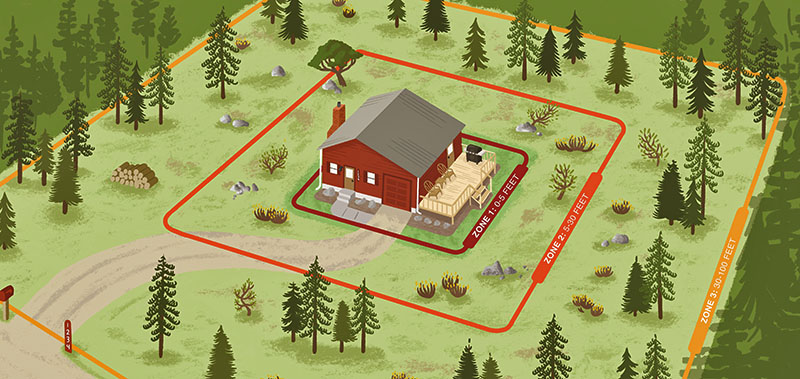
Every project ends with a mitigation packet: home ignition zone maps, before-and-after photography, and itemized receipts. Since Colorado's new insurance rules took effect in July, documented mitigation carries real weight with carriers — undocumented work doesn't.
%20(1).png)