These are two halves of one job, and doing either alone leaves a gap.
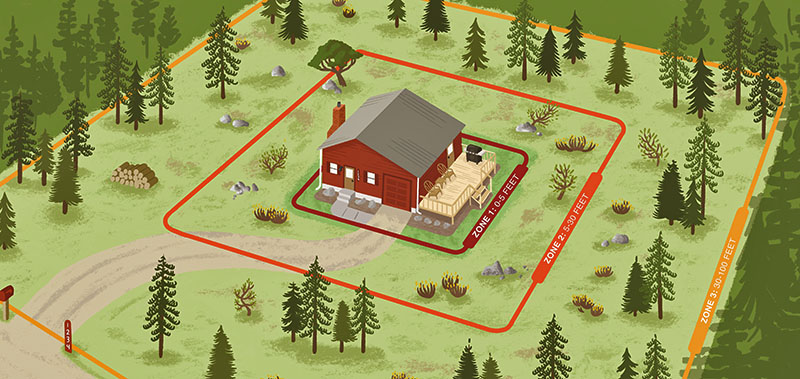
Defensible space manages the fuel around your house so fire arrives smaller, slower, and closer to the ground. Hardening addresses what happens when embers reach the structure anyway — and they will. Wind-driven embers travel well beyond any treated zone.
A house with perfect defensible space and open attic vents can still burn from the inside out. A hardened house surrounded by untreated timber can still be overwhelmed by radiant heat. On most properties, both need doing.
If there's one thing on this page worth acting on, it's this.
Attic vents, soffit vents, foundation and crawlspace vents, gable vents, dryer and bathroom exhausts — every one is an opening into the structure. Embers get pulled through them by wind and by the pressure differential a fire creates, and they land in insulation, framing and stored belongings. The house ignites from the inside, often after the fire front has already moved on.
Standard insect screen doesn't stop this. It's built to keep out bugs, not firebrands, and the aperture is too coarse.
We install Wildfire Defense Mesh 98 — the manufacturer's highest grade, not the entry-level product. Stainless steel woven mesh, both ember-resistant and flame-diffusing, tested to ASTM E2886 for resisting ember entry and direct flame impingement, and carrying a Class A fire rating under UL 723 and ASTM E84. It meets California Building Code Chapter 7A, the most demanding wildfire building standard in the country — a standard Colorado does not yet require.
Stainless steel matters here. Cheaper mesh corrodes through Colorado's freeze-thaw cycles and fails quietly over a few winters.
Where we install it:
Soffit vents are a different job. Most foothills homes have round soffit vents, and screening over them doesn't work well — the mesh won't seat properly against a curved opening, and you end up with gaps at the edges. We replace them outright with metal screen round vents sized to the existing hole. Cleaner install, no gaps, and it keeps the free ventilation area your attic actually needs.
Decks are where a lot of otherwise well-prepared homes lose.
The surface matters, but what's underneath matters more. Stored firewood, patio furniture, cardboard and years of accumulated needle litter create a sheltered fuel bed directly against your house — out of sight, so it gets forgotten. Embers blow in from the side, land in dry material, and burn upward into the deck framing and the wall behind it.
We screen the underside of decks and porches with Wildfire Defense Mesh 98. That turns an open ember trap into a sealed assembly: embers can't get in, the space stays ventilated, and the mesh diffuses flame rather than just blocking debris.
On many properties this is the single highest-return change available — more than the roof, more than the siding, and considerably cheaper than either.
The roof is the largest horizontal surface on your house and the biggest ember catcher.
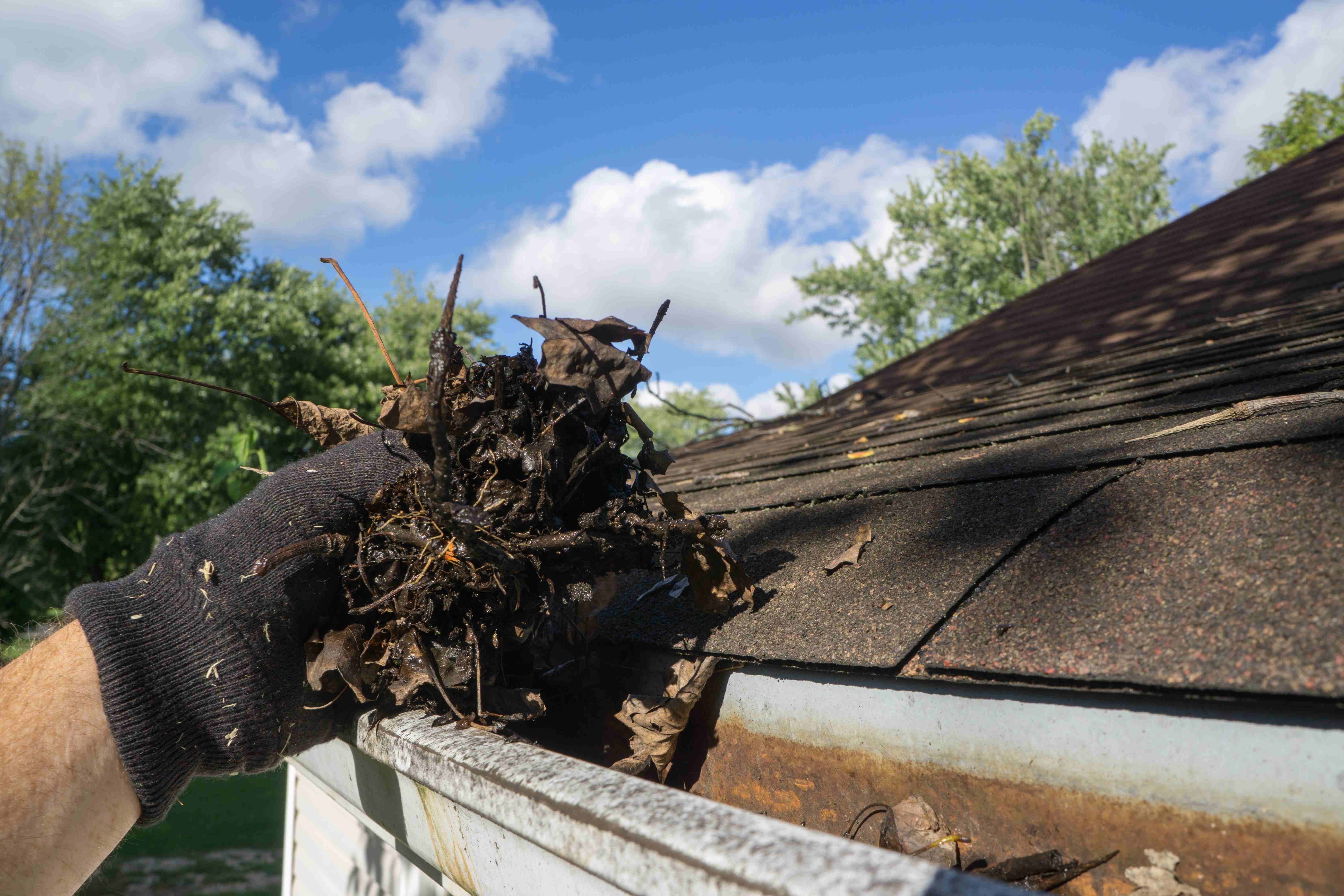
Gutters full of needles are the most common ignition point on a house, and the easiest thing here to fix. We install ember-resistant metal gutter guards designed for wildfire exposure rather than leaf control. Standard plastic and foam guards are themselves combustible — they become the fuel rather than preventing it. Metal guards keep needle litter out of the trough entirely, which removes the ignition point and means you're not on a ladder every autumn.
Class A roofing assemblies are now required for new construction and significant reroofing across much of Colorado's wildland-urban interface.
Roof valleys and low points collect needle litter, and that litter is a fuel bed sitting on your roof. Roof-to-wall junctions and open eaves need attention too — embers collect wherever surfaces meet.
Siding. Ignition-resistant materials are increasingly required at new construction and major alteration. Where siding meets the ground, the bottom few inches matter most — that's where embers accumulate.
Windows. Glass fails from radiant heat before the frame does, and once a window fails the fire is inside. Multi-pane and tempered glazing perform substantially better.
A wood fence running from open ground into your siding is a fuse leading directly to your house.
Jefferson County's updated code addresses this, requiring nonflammable fencing within eight feet of structures. Even where it isn't required, replacing the last several feet of fence before it meets the wall with a noncombustible section is cheap and removes a direct path.
Structure hardening moved from advice to requirement in Colorado during 2026.
Jefferson County's Wildfire Resiliency Code took effect for permits applied for on or after 1 July 2026, covering roofing assemblies, siding and deck framing, noncombustible deck surfaces, ember-resistant ventilation, fencing near structures, and a prohibition on certain highly flammable plants — junipers among them — within thirty feet.
None of it is retroactive. Living in your existing home triggers nothing. It applies when you pull a permit for qualifying new construction or exterior work, and it differs by county and municipality.
The IBHS Wildfire Prepared Home designation expanded to Colorado in 2026. It's a science-based standard covering the structure and its immediate surroundings, and because it comes from a body insurers themselves fund and trust, it functions as recognized documentation of property-specific mitigation.
Separately, since HB25-1182 took effect in July 2026, insurers using wildfire risk models must disclose your risk score, account for mitigation, and provide an appeal process.
What both mean practically: hardening work is worth more when it's documented. Every project we complete includes before-and-after photography, mapping, itemized receipts, and a record of what was installed where.
Hardening ranges from a few hundred dollars for vent screening to significant projects involving roofing or siding.
Most homeowners start with vents, gutters and the deck underside — the highest-return, lowest-cost items — and work outward from there. If you do nothing else this year, do those three.
Colorado offers a state income tax credit for qualifying mitigation costs on private land, and cost-share grants are available through several programs. We also offer payment plans and financing through trusted lenders.
What's the cheapest thing I can do that actually matters? Clear your gutters and roof valleys, then screen your vents. Between them they address the two most common ignition paths on a house, and neither is expensive.
What exactly do you install for ember protection? Wildfire Defense Mesh 98 — stainless steel, ember-resistant and flame-diffusing, meeting California's Chapter 7A standard. We use it to enclose the underside of decks and porches and to screen attic, gable, foundation and crawlspace vents. Round soffit vents get replaced with metal screen round vents instead, since screening over a curved opening leaves gaps. We also fit ember-resistant metal gutter guards.
Do I need to replace my roof? Not unless you're reroofing anyway or you have a wood shake roof. If you're already replacing it, that's the moment to make sure the new assembly meets current requirements.
Is home hardening required by law? Not for existing homes as they stand. Requirements attach to permits for new construction and qualifying exterior work, and they vary by county.
Will this lower my insurance premium? It can, and documented hardening carries increasing weight in Colorado underwriting. Carriers use their own models and make their own decisions, so nobody can promise a specific outcome — but undocumented work definitely won't help.
Can you do this alongside defensible space work? Yes, and it's the sensible way. One assessment, one plan, one crew mobilization, one documentation packet.
Home hardening across the Colorado foothills — Evergreen, Conifer, Bailey, Golden, Woodland Park and Nederland — and throughout Jefferson, Park, Teller, Boulder, Larimer, Douglas and El Paso counties.
The questions we get asked on nearly every property walk — cost, funding, and what it means for your insurance.
Wood production is a complex and vital industry that involves the cultivation, harvesting, processing, and utilization of wood for various purposes. It serves as a cornerstone in numerous sectors.
%20(1).png)
