
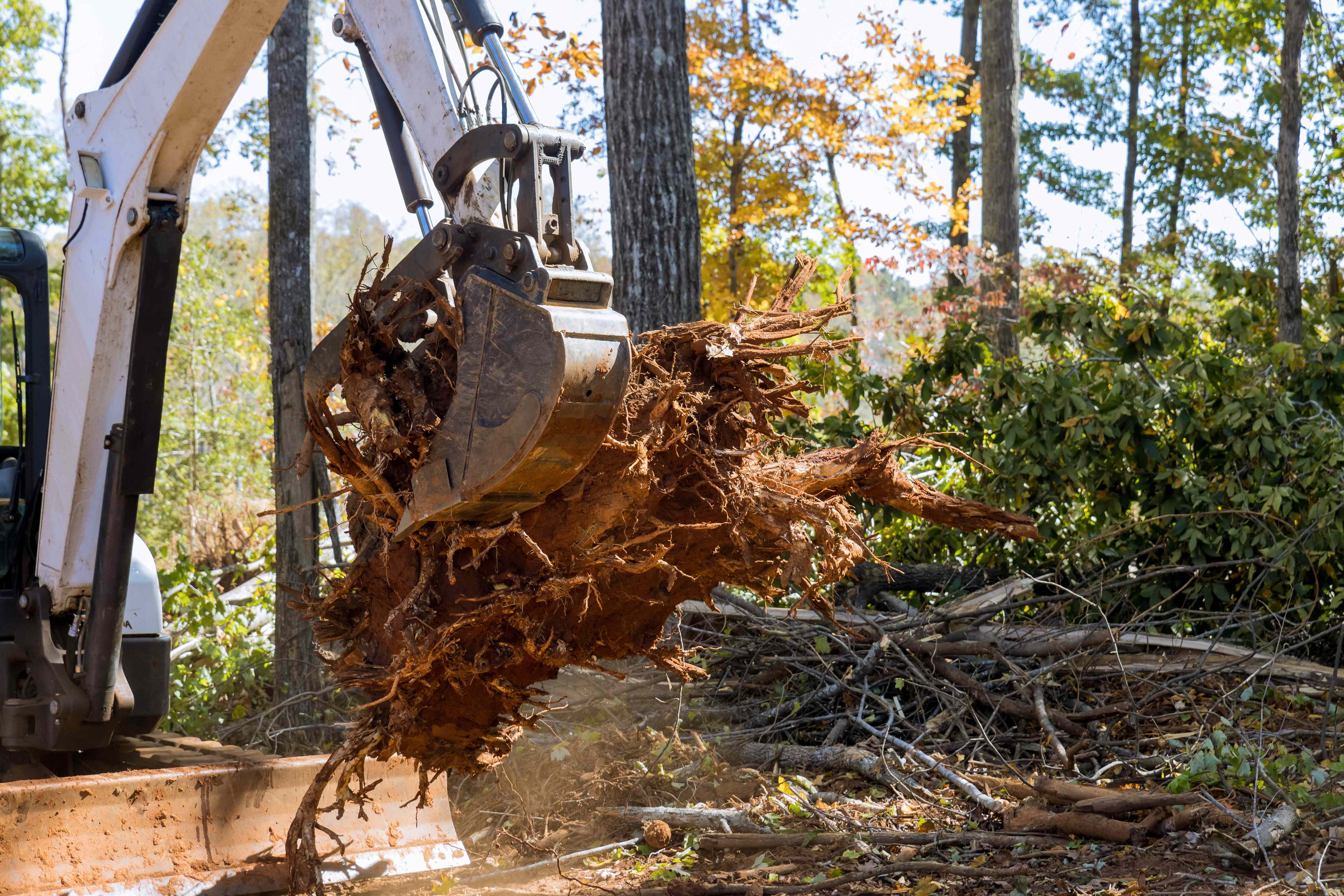
If you're building in the foothills, clearing the pad is the first job and the one that sets up everything after it.
We clear building sites, driveway alignments, utility runs and staging areas, working to your site plan and around whatever has to stay. On sloped ground that means thinking about where material goes and how water will move across the site once the cover is off, not just getting the trees down.
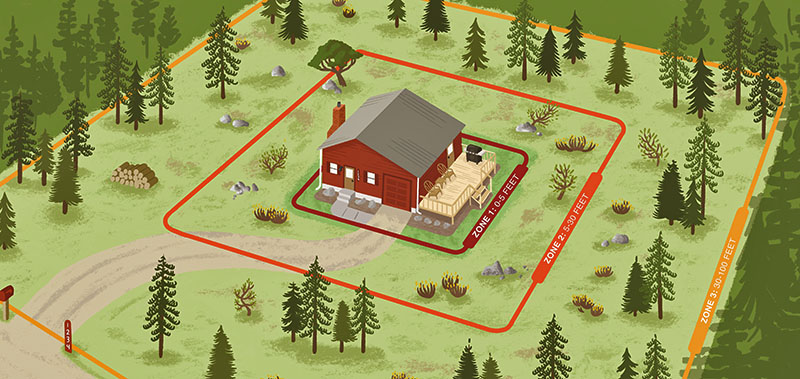
The part most people don't plan for: in much of Colorado's wildland-urban interface, your building permit now comes with a defensible space requirement attached, and a certified specialist has to verify it before the county signs off. Jefferson County's code took effect on 1 July 2026. Boulder County ties requirements to permits at unusually low thresholds. In Park County the fire district administers it rather than the county.
We're on Jefferson County's list of Certified Wildfire Mitigation Specialists approved to perform defensible space inspections. So on a Jeffco build we can clear the site, do the mitigation, and perform the inspection that releases your Certificate of Occupancy — one company, one schedule, rather than three parties coordinating around a deadline while your general contractor waits.
This is the work that quietly decides whether your property gets defended.
If a fire engine can't get up your driveway, can't turn around at the top, or can't clear the branches overhanging it, crews may not commit to it — not because they don't want to, but because taking an engine somewhere it can't back out of is how firefighters get killed.
It's also compliance. In Jefferson County the certified specialist verifying your defensible space also confirms that roads and driveways meet access standards. Properties fail on access more often than on vegetation.
Width, so a vehicle coming down can pass an engine coming up.
Vertical clearance, because overhanging limbs strip equipment off apparatus and block the escape route for anyone driving out.
A turnaround at the top. Backing a loaded engine a quarter mile downhill in smoke is not an option.
Surface and grade, where steep or washed-out driveways stop heavy apparatus.
Address visibility from the road, in both directions.
Forestry mulching
Mulching grinds standing vegetation into chip on site, in one pass, with nothing to haul away.
Where it's the right tool: heavy brush and small-diameter stems, oak thickets, regrowth on previously cleared ground, and larger areas where hauling would cost more than the clearing. The chip layer left behind holds soil in place, which matters on Colorado slopes.
Where it isn't: close to structures, where the material needs to leave rather than stay; on ground too steep or too tight for the machine; and where you want larger timber removed rather than ground up.
We'll tell you honestly which applies. Sometimes the answer is a mix — mulch the brush, hand-fall and haul the timber near the house.
Parcels that haven't been touched in years, properties bought with the intention of building later, and ground that's simply grown in past the point of being usable.
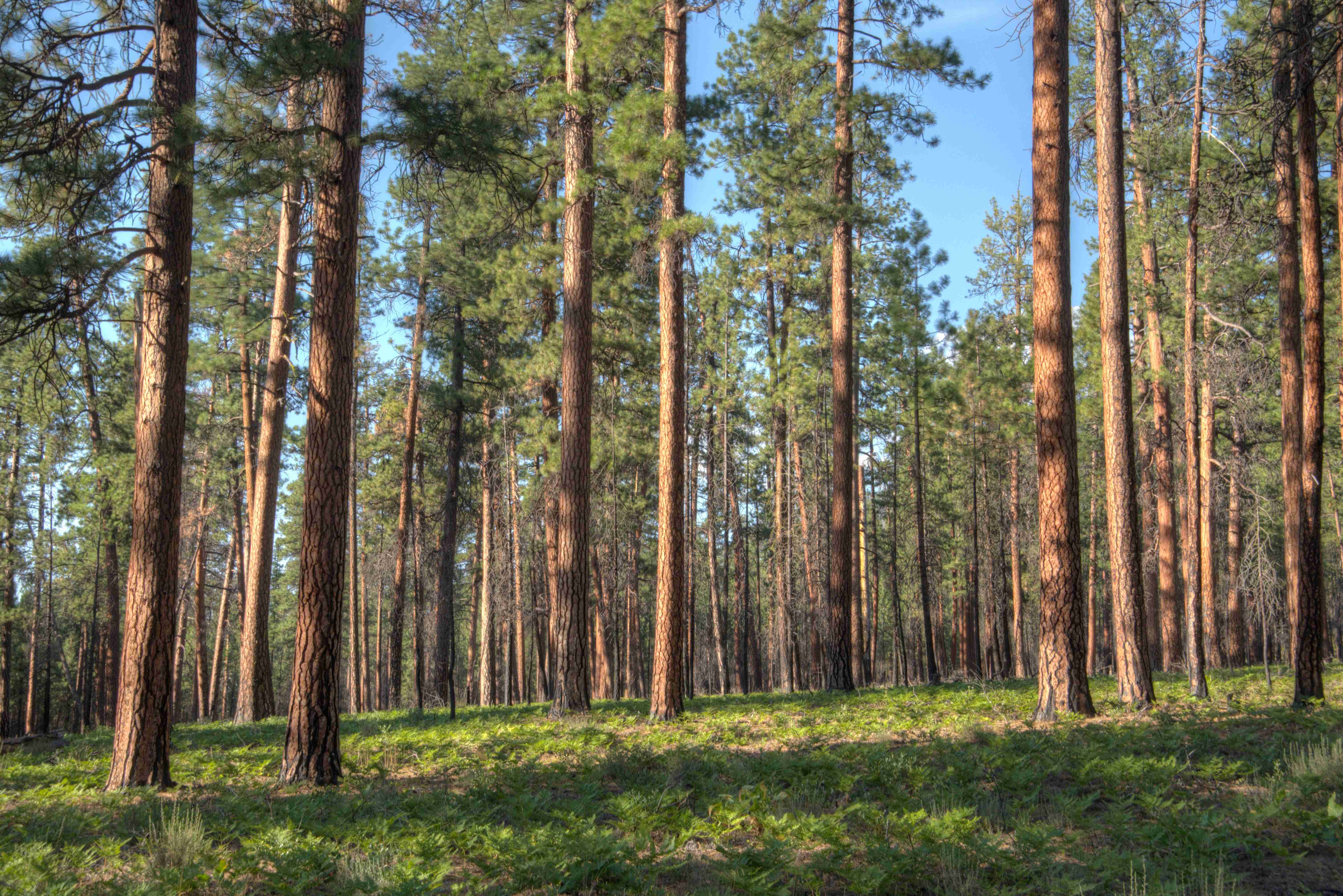
The question worth asking before you start is what you actually want afterwards. Cleared to bare ground is rarely the right answer in the foothills — it invites erosion and weeds, and it removes the thing you probably bought the property for. Most parcels want thinning and selective removal rather than clearing, with genuinely open ground only where you need it.
Slope and erosion
Colorado soils are thin, and removing cover changes how water moves across a site immediately.
The first heavy rain after clearing does more damage than most people expect, and on burned or steeply sloped ground it can be severe. We plan around it: leaving cover where it holds, spreading chip to protect exposed soil, keeping equipment off ground that won't take it, and stabilising anything disturbed.
If your site needs more than that, we'll say so before we start rather than after the first storm.
Chipped on site, hauled off, or mulched in place — depending on volume, access and what you want left behind.
This matters more than people expect. Several of the areas we work don't permit open burning at all, and a property left covered in slash after clearing is more hazardous than it was beforehand — you've taken standing fuel and laid it on the ground in a continuous bed. It also fails inspection in counties that require slash treated.
Where material has to leave, we work with local disposal sites. Where it can stay, chip spread away from structures is usually the better and cheaper answer.
Land clearing overlaps with the rest of what we do, and on most projects it isn't a standalone job.
Clearing a building site usually runs alongside defensible space work, because the permit requires it. Access clearing is often the highest-value part of a mitigation project. And on larger parcels, clearing and hazardous fuels reduction are the same crew doing related work on different parts of the ground.
Telling us what you're actually trying to achieve — build, sell, insure, or just use the land — gets you a better plan than asking for a price per acre.
Do you clear for new construction?
Yes — building pads, driveway alignments, utility runs and staging. Worth involving us early, because in several counties defensible space verification is now part of getting your Certificate of Occupancy.
Will clearing cause erosion problems?
It can, and on Colorado slopes it often does if nobody plans for it. We work erosion-conscious: leaving cover where it holds, spreading chip on exposed soil, and stabilizing disturbed ground.
Can you improve my driveway for fire access?
Yes, and it's some of the highest-value work on a foothills property. Width, overhead clearance and a turnaround at the top determine whether an engine will commit to defending your house — and in Jefferson County it's checked at inspection.
What's the difference between clearing and forestry mulching?
Mulching grinds vegetation into chip on site in one pass and leaves it there. Clearing removes material from the site. Mulching suits brush and small stems over larger areas; clearing suits building pads and anything near structures.
Do I need a permit to clear my land?
Sometimes, and it depends on the county, the acreage and what you're doing afterwards. If clearing is part of a build, the building permit is usually where the requirements attach. We'll tell you what applies during the assessment.
How much does it cost?
Density, slope, access and what happens to the material drive the number far more than acreage does. Two parcels of the same size can differ several times over. We walk it and give you a firm written figure at no charge.
Land clearing, site preparation, driveway access and forestry mulching across the Colorado foothills — Evergreen, Conifer, Bailey, Golden, Woodland Park and Nederland — and throughout Jefferson, Park, Teller, Boulder, Larimer, Douglas and El Paso counties.
The questions we get asked on nearly every property walk — cost, funding, and what it means for your insurance.
Wood production is a complex and vital industry that involves the cultivation, harvesting, processing, and utilization of wood for various purposes. It serves as a cornerstone in numerous sectors.
%20(1).png)
